
Chronicling an attempt to send cameras into the upper atmosphere in order to photograph space and the Earth from 90,000+ ft.
Tuesday, May 21, 2013
Updates
Project Daedalus has been put on hold for a little while, as I have had finals, SATs, ACTs, and AP tests to study for and take. I am nearing the end of the school year, and the end of this year's standardized testing, and will be able to focus more on the project. I am rounding up the last remaining materials for the project; the cameras have been ordered, and the balloon and parachute are soon to follow. More updates to come!

Sunday, April 7, 2013
Arrivals
The PocketFinder has arrived! Straight from our awesome sponsors at PocketFinder, this personal GPS is actually about the size of your wrist, and comes with a soft case (not pictured). Once charged, the device syncs with both the web and free mobile apps available on iOS and Android phones. One of the most useful features of the PocketFinder is the ability to set unlimited geofences on the device, so that when the locator ventures out of the area you specify, you will get a notification! The device can be controlled from either the web app or the mobile app, and the mobile app has all the same features that the web app has. Visit their website to learn more about all the awesome features it offers. We're charging it up right now, and are very excited to test and use this device in Project Daedalus!


Saturday, April 6, 2013
Regulating Daedalus
 |
| They don't want our project to collide with one of these. |
1. Cell Phones are not permitted to track high-altitude weather balloons in flight.
2. Payloads cannot exceed a package weight/size ratio of three ounces per square inch. *
3. No payload package can exceed 6 lb in weight.
4. Entire weight of all payloads cannot exceed 12 lb in total weight (Excludes weight of balloon).
5. No rope or cable should be used which requires more than 50lb of force to separate payload packages from balloon.
6. No one may launch a high-altitude weather balloon which creates a hazard to other people and property. (i.e. Incorrect parachute, faulty rigging, inappropriate launch location)
7. No one may use a high-altitude weather balloon to drop objects (i.e. gliders and projectiles).
* Determined by dividing total package weight by the area in square inches of the smallest surface.
So, we don't need to worry about most of these requirements. We're not using a cell phone to track our project (Thanks PocketFinder!), so we're already 1 for 7. Our payload is going to be much lighter than 6 lbs so that our balloon can actually lift it all the way to the upper atmosphere, which takes care of #3 and #4. 3 for 7. We checked with the balloon company, and the balloon rope definitely does not require 50 lb. of force to separate from the payload. We would also have a very hard time recovering the cameras in the payload if it required 50 lb of force to separate from the ropes. We will triple-check our payload, the parachute, and the balloon to ensure a safe and quick flight up and down, so hopefully we won't be creating any hazards (#6). We're definitely not dropping any objects from our balloon, and the package will be guided down by the parachute, so #7 is taken care of. 6 for 7. Basically, we just have to make sure that (final net weight) / (final area) ≤ 3, and we will meet all the regulations!
Thursday, April 4, 2013
The Master Plan
You may ask, how will this project work? Well, here's the basics: Start with a commercial-grade weather balloon... not something for a birthday from Party City or the local toy store, this is a serious balloon that carries scientific equipment. Once we get ourselves one of those, we're going to hook it up to a payload: a rugged-but-light container (a.k.a. foam beer cooler) that will carry our cameras and gear. A parachute will be attached between the balloon and payload. Now, we fill the balloon with enough helium to get the lift strength we need to get to a certain altitude. The balloon will be lifted up, and if we have enough helium and a light enough payload, it should get to about 90,000 to 100,000 feet, the top of the atmosphere, with the cameras taking video the whole time.
Well, that's cool and all, but how is it going to come down? If we have enough helium in the balloon, and it gets to the above-mentioned height, it's reaching the point where there's basically no atmosphere left... so, do you remember your high school physics? Balloon filled with gas, rising and reaching decreasing atmosphere (pressure) outside the balloon = balloon expands until... "BOOM"... balloon bursts, payload and parachute start falling back to earth, parachute opens when there's enough air under it, and... the whole contraption (minus the balloon that graciously gave its life for our project) falls gently back to earth. Hopefully. This whole flight, from launch to landing, should be about 2-3 hours.
 |
| This is roughly what the project will look like in action |
Then what? Well, we go find it. Fast. There's a bunch of cool cameras and gadgets in there, which people may like and decide to keep (assuming the payload has not become a flattened pile of foam and expensive electronics). Our sponsors are counting on us to recover and publish some awesome footage of the upper atmosphere and space, and if the cameras they paid for are missing, then we will have hell to pay.
So, we will track it with the on-board GPS, and try to stay roughly under where it is during the flight (courtesy of the PocketFinder, which will broadcast its location until it reaches the far reaches of the atmosphere, and then resume its broadcasts on the way back down). Hopefully, this will lead us to its eventual landing site.
Assuming everything else goes as planned, the "where" factor of the landing is the big worry. It could land in water, high up in a tree, on the roof of a shopping mall, in the courtyard of a maximum security prison, in restricted secret government areas, on top of a mountain, or in many other places difficult or inadvisable to get to. We have to pray and hope the wind brings it down in a nice field of grass a few yards from a quiet, isolated country road, or at least somewhere we can get to it without rappelling gear and assault weapons.
So IF it went up and flew over terrestrial obstacles, IF the cameras and gear worked properly at high altitudes and extreme cold temperatures, IF it gets to burst altitude rather than just hovering for days and traveling around the planet a few times, IF the parachute opens properly on descent, IF it lands safely and relatively softly, and IF said location is somewhere accessible, IF we get to it before someone else finds it, and IF the cameras have substantive footage, then we're going to have one kick-ass video from SPACE. What could possibly go wrong?
Tuesday, April 2, 2013
ZePost about the ZLog7R
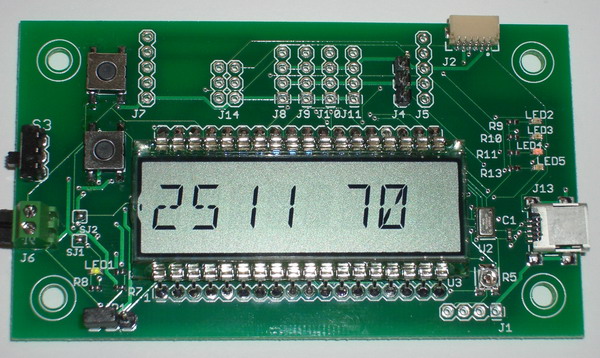 |
| The ZLog7R. Look at that display. Fancy. |
- Altitude
- Temperature
- GPS Location
- Atmospheric Pressure
Sensors + Sponsors + Science. The possibilities are endless.
Saturday, March 30, 2013
The Phantom Excitedness (alternatively: Hopefully we won't be sued for these Star Wars references)
We're getting close to physically launching the project! Parts have been ordered, and the Daedalus Team can barely control themselves in apprehension for this awesome balloon. How awesome, you say? Well, on a scale from 1 to AWESOME, it's sitting at approximately Indiana Jones status right now. (give or take 5 points, of course.)
Friday, March 22, 2013
Return of the Daedi
We're back, with a sponsor!!! The only way we can express our happiness is through nonsensical punctuation, since pure text simply won't cut it.
( ͡° ͜ʖ ͡° )
^ This is basically how we feel right now. While researching the parts needed for this ambitious project, we knew we had to include a GPS tracker to find the payload. Many of the GPS systems we researched were bulky, power-hungry, and expensive. Luckily, we found one amazing product and company that suit our needs perfectly. The PocketFinder is a tiny little device that will update web and mobile apps in real time with its coordinates, distance, speed, altitude, and more! PocketFinder is graciously letting us use one of their devices in our project, and we recommend this useful product to anyone doing similar projects.
http://www.pocketfinder.com/how-it-works/
More posts coming soon!
 |
| The PocketFinder |
http://www.pocketfinder.com/how-it-works/
More posts coming soon!
Friday, March 15, 2013
The Empire (doesn't) Strike Back
The budget spreadsheet has been completed, for the time being. Although the total estimate is more than what we had originally anticipated, the project can still continue smoothly without too much worry. Hopefully we can find some generous sponsors to offset the cost! The Project team is, well, pumped, to say the least. We are all extremely excited that we can actually bring this idea to fruition, and be able to see space, not just from pictures from some satellite or lowly Hubble space telescope (amateurs). but from our own personal space-camera apparatus, with picture quality that will blow those other government-sponsored projects out of the water. However, there is no water in space, so we guess that they will be blown out of......the cosmos? Yeah, that sounds much cooler.
 |
| We're hoping to see images similar to this one from the project |
Thursday, March 7, 2013
A New Hope
Space is cool! I always wanted to see space, but it's pretty tough when I don't have an extra $200,000 laying around. I wish there was some way to extend my eyes in order to see out of the blue-tinted sky above us.....
I'VE GOT IT!!
I will send a portable eye into space using a balloon and a parachute.
Impossible, you say? Nay, skeptical fellow, not impossible. In fact, it's the goal of the Project Daedalus team: to fly a camera into space in order to photograph our planet from above and see the curvature of the Earth. We here at Project Daedalus have always been fascinated with space and what exists past the Earth's atmosphere, and believe we have found a way to see what does exist beyond the vague blue ceiling above our heads. The budget spreadsheet has been started, and more updates will follow.
I'VE GOT IT!!
I will send a portable eye into space using a balloon and a parachute.
 |
| Hopefully, we'll be gathering images like this one. |
Subscribe to:
Posts (Atom)